Some cookbooks are meant to be read on the sofa, not propped against the flour. They have a voice, a point of view and a way of making an ordinary Tuesday supper feel like part of a story. Here are six to read slowly, with a cup of tea.
Six to read like novels
A Book of Mediterranean Food by Elizabeth David (1950). Written when food in Britain was still grey, it is full of sun, markets and olive oil, and it made a generation hungry.
The Art of Eating by M. F. K. Fisher (1954). A collection of essays about food, hunger and company by one of the great American food writers. There is barely a recipe, but you will want to cook afterwards.
Home Cooking by Laurie Colwin (1988). Funny, honest essays about kitchen disasters and small triumphs, with recipes tucked in. It feels like a friend talking.
The Book of Jewish Food by Claudia Roden (1996). Recipes together with the history, travels and family stories of Jewish communities around the world. You can read it like a travel book.
Toast by Nigel Slater (2003). A food memoir of a childhood told through what was on the plate. Gentle, sad and sweet.
Salt, Fat, Acid, Heat by Samin Nosrat (2017). A friendly guide to why food tastes good, with lovely illustrations by Wendy MacNaughton. It explains more than it instructs.
How to read a cookbook slowly
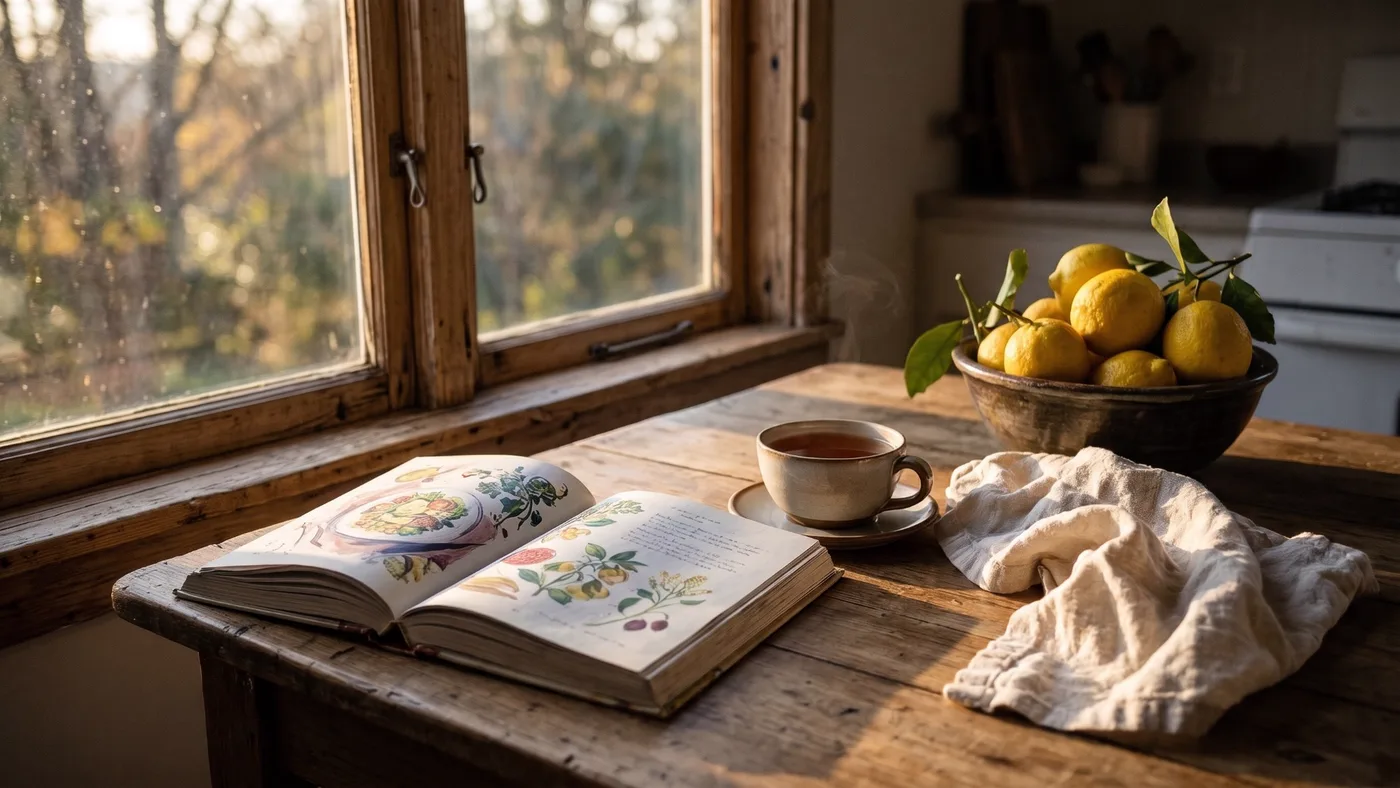
- Choose a window and a mug. Daylight and a warm drink do half the work.
- Read the introduction. It is often the best part.
- Cook one recipe, not ten. A single dish makes the book feel real.
- Keep a pencil nearby and note what you would change.
Most libraries have a good cooking shelf, and borrowing one for a week is a cheap way to find a favourite.